Datasheets Most questions will be answered in the product datasheets.
Tech Support Click for our tech support troubleshooting article.
Tutorials index:
Basic usage | Intermediate Usage | Advanced Usage | Interfaces / Peripherals | Applications Notes | Pin Operation | Test Results | Legal Usage
Basic Usage
Ultrasonic Sensor Quick Start Guide – HRLV‑MaxSonar‑EZ
Date Posted: February 14, 2017
This is provided to serve as an easy to use set-up guide for the HRLV‑MaxSonar‑EZ family of ultrasonic sensors, awarded one of the Top 10 Sensor Products of 2012 from Sensors & Transducers Magazine. This ultrasonic sensor uses sound to measure the distance to nearby objects, and then reports the information through one of the three sensor outputs. …
Read More
Read More
Sensor Selection, Set-up, and Troubleshooting Overview
Date Posted: April 28, 2016
Key Takeaways The sensor selected must fit your environment Setting up your sensor Understanding how sound waves affect the beam pattern of a sensor Implementing Multiple Sensors Most effective way to troubleshoot your sensor with MaxBotix Technical Support Full Article Links 105-Protected vs. Non-Protected Environments 016-LV-MaxSonar-EZ Quick Start Guide 109-An Introduction to the 42kHz Sound…
Read More
Read More
Tech Support Services to Help You Solve Your Sensor Problems
Date Posted: February 18, 2016
Key Takeaways FAQs by Tech Support Tips for sensor selection Troubleshooting tips Technical support services help solve sensor problems, wiring, and mounting as well as application-based sensor selection. Technical support for MaxBotix Inc., may be delivered over the phone (218-454-0766 ext 2), by e-mail ([email protected]), or by the contact tab on the MaxBotix Inc., webpage…
Read More
Read More
An Introduction to the 42kHz Sound Wave
Date Posted: July 8, 2015
Key Takeaways MaxBotix® Inc., currently uses 42kHz sound waves in all of its ultrasonic sensors Ultrasonic sensors will detect objects regardless of their visual characteristics A 42kHz sound wave will not range through solid objects The 42kHz Sound Wave MaxBotix® Inc., sensors provide sensing solutions for a wide variety of applications. Our Sensor Selection Guide…
Read More
Read More
Protected vs. Non-Protected Environments
Date Posted: May 27, 2015
Key Takeaway How to distinguish between a protected and non-protected environment. Protected vs. Non-Protected Environments When choosing an ultrasonic sensor it is very important to be aware of the surrounding environment. This is a key factor and the first consideration when selecting a sensor. This requires looking at the environment that your sensor will be…
Read More
Read More
MaxSonar Troubleshooting Guide
Date Posted: July 10, 2012
Troubleshooting the MaxSonar Sensor Family Our sensors are improved to not allow unstable readings. Occasionally unstable range readings occur. Within this tutorial, we will explain how to identify, troubleshoot, and eliminate the cause of unstable range readings. This will work for all sensor lines. Start troubleshooting with a single sensor and this simple test. This
Read More
Read More
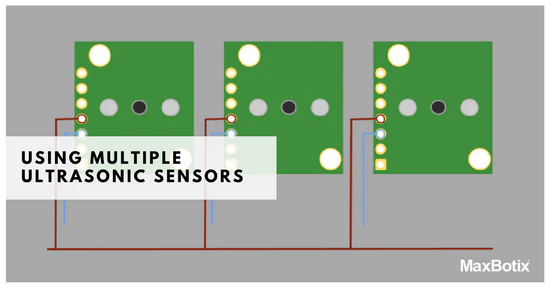
How to Use Multiple Ultrasonic Sensors
Date Posted: July 10, 2012
When using a single ultrasonic sensor, typically it is possible to just let it range continuously in free run mode. This method is easy and works well. Please consult your sensor datasheet or Finding Distance Using Analog Voltage for calculation formulas for analog voltage to distance. This guide covers: ‑Free Run Operation ‑Simultaneous Operation ‑Commanded…
Read More
Read More
Reading MaxSonar Beam Patterns
Date Posted: January 10, 2018
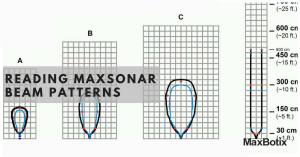
Reading MaxSonar Beam Patterns MaxBotix Inc. provides beam patterns for all of our ultrasonic sensors to assist users in choosing the correct sensor for their application, target size, and distance. Each beam pattern diagram is a 2D representation of the detection area of the sensor. In reality, the actual beam pattern is shaped like a…
Read More
Read More
Intermediate Usage
Packaging Options for the MaxSonar Sensors
Date Posted: July 26, 2016
Key Takeaways Maxbotix Inc., offers a variety of housing types for many of our popular sensors The WR full horn housings generally provides the best performance Compact WR housings provide wider beam patterns with weaker detections Over the past 10 years, MaxBotix expanded the number of packaging options available for each many of our sensors…
Read More
Read More
Sensor Output Options
Date Posted: March 18, 2016
Key Takeaways Analog voltage provides range information on a linear voltage scale Pulse width outputs a digital representation of range using a pulse which directly corresponds with the range Serial data output of our sensors delivers asynchronous data at TTL voltage levels The analog envelope output is a minimally filtered output of the acoustic waveform…
Read More
Read More
How Salt Water Affects Electronics
Date Posted: February 26, 2016
Key Takeaways Know the effects of saltwater on electronics See how saltwater damages electronics Learn how to clean off saltwater residue Pure distilled water does not conduct electricity and will not damage most electrical equipment that is clean and free of debris. Tap water is not pure water because it mixes with polarized minerals as…
Read More
Read More
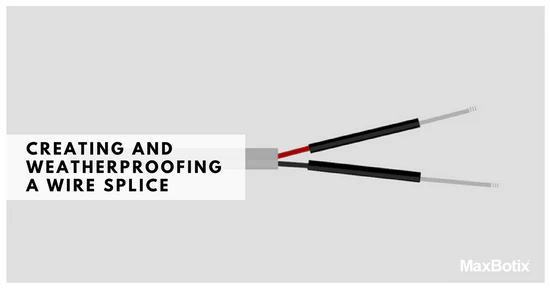
Creating & Weatherproofing a Wire Splice
Date Posted: February 12, 2016
Key Takeaways List of Materials to properly splice wires List of Materials to properly create a weatherproof wire splice Techniques to properly splice wires Techniques to properly create a weatherproof wire splice List of Materials Needed For Splicing Wire To Weatherproof a Wire Splice Goggles Hands-free clamp Wire stripper Soldering iron with stand Lead free…
Read More
Read More
Proper Soldering & Desoldering Techniques of a MaxBotix Inc., Sensor
Date Posted: February 09, 2016
Key Takeaways List of Materials to properly solder and desolder a MaxBotix Inc., sensor Techniques to properly through-hole solder a MaxBotix Inc., sensor Techniques to properly desolder a MaxBotix Inc., sensor Materials Needed for Soldering Materials Needed for Desoldering: Goggles, Hands-free clamp, Wire stripper, Soldering iron with stand Soldering iron tip, Lead-free solder ~.031…
Read More
Read More
What to Know About Data Averaging
Date Posted: January 22, 2016
Key Takeaways Averaging range data can be used to smooth out unstable readings The mean, median, and mode are the three most common averages MaxBotix Inc., recommends the use of a median or mode for averaging range data Finding an average or standard data value can be a useful way to understand the underlying trends…
Read More
Read More
Long Range Sensing
Date Posted: June 30, 2015
Key Takeaways MaxBotix® Inc., limits its maximum detection range to 10 meters (32.8 feet) MaxSonar® sensors offer reliable people detection out to ~5.4 meters (~18 feet) Targets must be perpendicular or able to reflect sound back to the sensor for long-range detection MaxBotix® Inc., presses the limits by pursuing new technologies Ten Meter Ranging…
Read More
Read More
Weatherproof Your Pin Out
Date Posted: June 08, 2015
Weatherproof the Pin Out of Your MaxSonar® with a Sensor Wire Attach Option Key Takeaways MaxBotix® Inc., offers a wire attach option for users who need a sealed pin out Wire attach options free you from soldering directly to the sensor Shielded cable greatly reduces the risk of EMI in your application A Fully Sealed…
Read More
Read More
Cube Corner Reflectors
Date Posted: March 12, 2015
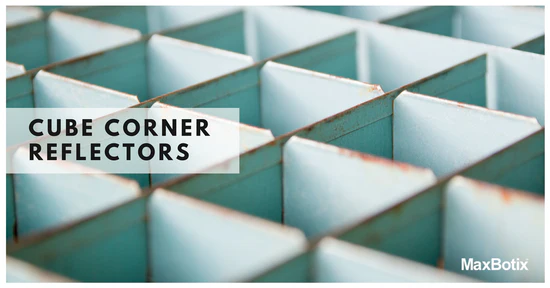
Corner Reflectors Can Cause Surprise Clutter Illustration 1: Two common shapes of corner reflectors. Sometimes when using an ultrasonic sensor, users experience detection of unwanted objects that appear outside the expected beam pattern. These types of detections are the result of reflectors present in the environment. Corner reflectors can be surprisingly small, yet present a large…
Read More
Read More
Using an Arduino with an I2C-MaxSonar
Date Posted: March 27, 2015
A number of customers have asked if the Arduino supports talking to the I2C‑MaxSonar sensors over an I2C interface. The short answer is “Yes.” The more technical answer is – be prepared to install a new library and learn a bit about digital electronics. Never fear! I have worked to provide a clear and easy to…
Read More
Read More
Controlling A MaxSonar Sensor
Date Posted: July 10, 2012
Triggering and Free Running All the MaxSonar sensors, by default, will operate in a free run mode. What this means is the sensor will continue to range until power is removed from the sensor. This is generally the easiest way to operate in a single sensor setup. If you are operating multiple sensors please visit…
Read More
Read More
Advanced Usage
Robot Operating System (ROS) used with a MaxBotix Ultrasonic Sensor
Date Posted: February 03, 2017
A MaxBotix ultrasonic sensor installed in a robot using the Robot Operating System (ROS) provides the valuable data needed to solve the complex obstacle avoidance and navigation problems on your autonomous robots. The Robot Operating System is a powerful resource that enables collaborative development of truly complex robot software. ROS is designed to be run on any Ubuntu device from a Raspberry Pi to a dedicated PC, learn more about how to connect a Raspberry Pi with a USB ultrasonic sensor…
Read More
Read More
Analog Envelope Captured Using a PicoScope
Date Posted: March 31, 2017
Key Takeaways Capture the analog envelope Use a picoscope, Screenshot the analog envelope, The analog envelope output is the log-compressed voltage output of the acoustic return signal, which provides users with the ability to see the internal workings of the sensor. This output allows users the ability to easily verify the overall operation…
Read More
Read More
Quick Start Oscilloscope Operation Guide
Date Posted: January 28, 2016
Key Takeaways Oscilloscopes display the properties of electrical signals as they change over time Most oscilloscopes offer a number of tools or options to measure electrical signals Proper triggering helps to fix the waveform in one spot on the display An oscilloscope displays electrical signals as they change over time. Understanding the operation of an…
Read More
Read More
Power Supply Testing
Date Posted: January 11, 2016
Key Takeaways A faulty power supply can lead to improper sensor operation Issues with a power supply will manifest throughout the entire circuit The power supply should be tested early in the troubleshooting process Required Equipment Properly calibrated voltmeters and current meters (resolution should be 10 times the parameter being measured) Oscilloscope with bandwidth up…
Read More
Read More
Methods to Conceal an Ultrasonic Sensor
Date Posted: November 18, 2015
Methods to Conceal an Ultrasonic Sensor: The use of acoustically transparent materials Key Takeaways Speaker grill cloth, wire mesh and open-celled foam are ways to conceal ultrasonic sensors for your application For proper operation, moisture, temperature, and acoustic return must be taken into consideration when attempting to conceal the sensor Ultrasonic sensors are not…
Read More
Read More
Wireless Sensor Monitoring
Date Posted: November 19, 2013
Using a MaxSonar® with an ioBridge® Wireless Endpoint Pro Using a MaxSonar with ioBridge products have proven to be effective methods of monitoring distance over the internet in real-time from anywhere in the world. This solution quickly connects you to the real-world information you want from a variety of devices. Using this system, users were…
Read More
Read More
Web‑based Remote Monitoring
Date Posted: July 20, 2012
Remote monitoring for the MaxSonar is easily available with the help of a bridge device such as the ioBridge IO-204. It has become simpler to integrate a MaxSonar into applications like measuring tide level or fuel level. The ioBridge IO‑204 module allows for remote sensing over the internet. All that is needed is a MaxSonar…
Read More
Read More
MaxBotix Code Examples
Date Posted: July 10, 2012
1) Code example for BasicX, BX24p.Link 2) Code example for the Basic Micro, Atom.Link 3) Code example using Wright Hobbies, DevBoard-M32 (AVR using Bascom). Link 4) Code example using Parallax, Basic Stamp BS2, BasicStamp. Link 5) C Program Driver for MaxBotix MB7066. Link 6) Arduino I2C code Examples for I2CXL-MaxSonar sensors. Link Code Example for BasicX, BX24p…
Read More
Read More
Finding Direction and Distance
Date Posted: January 12, 2011
Triangulation Finds the Direction and Distance to a Pole Using the HRLV-MaxSonar-EZ1 (MB1013). Download this Ultrasonic Pole/Tower Sensing & Detection Application Note! This PDF will show you how to use one sensor for pole detection and distance sensing. Or with two sensors, you can determine the distance, direction, and alignment to the pole…
Read More
Read More
Interfaces / Peripherals
Useful Arduino Projects with Robots
Date Posted: November 21, 2016
We are hand-picking the best Arduino Projects to power up your skills. We are working on a brilliant selection of inspirational ideas to help you build extraordinary projects without the need for expensive add-ons or hard-to-find-parts. Learn, master & create fun Arduino projects. Our fun projects are going to be great for beginners, advanced users, hobbyists, students, and teachers…
Read More
Read More
How to Set Up up Raspberry Pi Zero for an I2C Sensor
Date Posted: November 18, 2016
Brief Synopsis: This tutorial demonstrates how to set up an I2C circuit using a Raspberry Pi product such as the classic Raspberry Pi, Raspberry Pi Zero, Raspberry Pi 2, or Raspberry Pi 3 and an I2C Sensor MaxSonar. The article was written and tested on an R Pi with the September 2016 version of the Raspbian Jessie with PIXEL OS. For more information regarding the Raspbian Jessie with PIXEL OS, check out What is Pixel for Rasbian Jessie…
Read More
Read More
Try These Raspberry Pi Projects with Ultrasonic Sensors
Date Posted: November 31, 2016
We’ve put together some of the best and worthwhile Raspberry Pi Projects to make your time fun and educational. Explore below easy, simple fascinating Raspberry Pi Projects to get started with, along with some complex projects for advanced users. At this point, the Raspberry Pi is a modern legend. These series of tiny, low-powered computers provides an inexpensive and relatively easy base for electronics projects…
Read More
Read More
Connect a Raspberry Pi Zero with a USB Ultrasonic Sensor
Date Posted: August 31, 2016
The Raspberry Pi family of products opens the world of coding up to all ages with their easy interface and budget-friendly pricing. The Raspberry Pi is a single-board computer small enough to fit in your wallet, and the Raspberry Pi Zero is even smaller…
Read More
Read More
Interfacing a Raspberry Pi with an Ultrasonic Sensor
Date Posted: August 02, 2016
Cool Raspberry Pi Projects – Interfacing a Raspberry Pi with an ultrasonic sensor to read serial data Do you enjoy or love testing new Raspberry Pi Projects? Maxbotix has put together a tutorial that teaches you how to interface a Raspberry Pi with an ultrasonic sensor to read TTL serial data. You may also want…
Read More
Read More
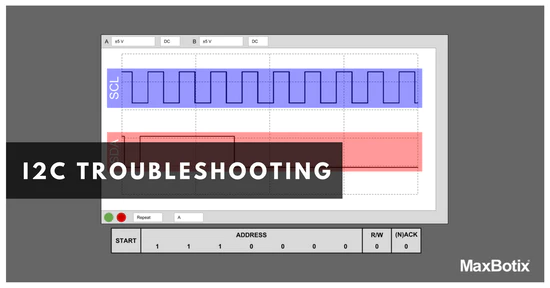
I2C Troubleshooting
Date Posted: April 08, 2016
Key Takeaways Pull-up resistor values for an I2C circuit are bus speed dependent MaxBotix Inc., sensors require clock stretching for bus speeds above 50kHz Sensor addresses must be properly set and polled for proper operation What is I2C? Integrating a number of devices together into one circuit and individually commanding each device allows you to …
Read More
Read More
Using an Arduino with an I2C‑MaxSonar
Date Posted: March 27, 2015
A number of customers have asked if the Arduino supports talking to the I2C‑MaxSonar sensors over an I2C interface. The short answer is “Yes.” The more technical answer is – be prepared to install a new library and learn a bit about digital electronics. Never fear! I have worked to provide a clear and easy to …
Read More
Read More
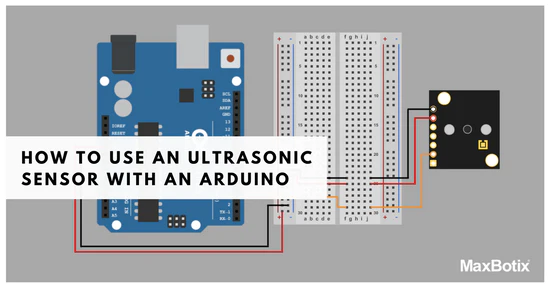
How to Use an Ultrasonic Sensor with an Arduino
Date Posted: April 30, 2014
Arduino ultrasonic sensors are very popular for integrating when designing solutions for many applications in robotics and automation. The MaxBotix ultrasonic sensors that interface with the Arduino platform make it easy for users to implement the needed ranging capabilities no matter the need. There are ultrasonic sensors for Arduino with RS232, analog voltage, pulse width or I2C sensor outputs. Take a look at this complete guide to Arduino Boards to better assist you which Arduino board best suits your needs. …
Read More
Read More
Wireless Sensor Monitoring
Date Posted: November 19, 2013
Using a MaxSonar® with an ioBridge®Wireless Endpoint Pro Using a MaxSonar with ioBridge products have proven to be effective methods of monitoring distance over the internet in real-time from anywhere in the world. This solution quickly connects you to the real-world information you want from a variety of devices. Using this system, users were able …
Read More
Read More
Web‑based Remote Monitoring
Date Posted: July 20, 2012
Remote monitoring for the MaxSonar is easily available with the help of a bridge device such as the ioBridge IO-204. It has become simpler to integrate a MaxSonar into applications like measuring tide level or fuel level. The ioBridge IO‑204 module allows for remote sensing over the internet. All that is needed is a MaxSonar …
Read More
Read More
Applications Notes
USB Ultrasonic Distance Sensors
Date Posted: April 19, 2017
MaxBotix’s USB ultrasonic distance sensors are low-cost ultrasonic proximity sensors featuring an easy-to-use USB interface that connects directly to a computer with a standard Micro-B USB cable. The interface was designed to be very easy and intuitive to use. These USB ultrasonic distance sensors provide a component module solution that offers easy integration with USB connectivity, ready-to-use, low power demands, no sensor dead zone, calibrated beam patterns, stable range readings, and a host of other features. …
Read More
Read More
UAV Ultrasonic Sensors – Measure Distance and Proximity
Date Posted: April 19, 2017
“What goes up, must come down.” One of the biggest considerations for how much time a UAV spends in the air is weight. This means that every ounce affects the UAV. We design our UAV ultrasonic sensors to be high performance, small, compact, low-cost, easy-to-use and lightweight. Our recommended ultrasonic sensors for UAVs weigh approximately 5.8 grams…
Read More
Read More
Ultrasonic Sensors for People Detection in an Application
Date Posted: January 10, 2017
MaxBotix ultrasonic sensors solve the common problem of people detection. Our ultrasonic sensors offer the ability to detect people over a wide range of distances with a high read rate and excellent reading to reading stability. Ultrasonic sensors support a wide range of needs from kiosk based applications to occupancy detection and even to autonomous navigation…
Read More
Read More
Robot Using an Ultrasonic Sensor
Date Posted: January 10, 2017
A robot without an ultrasonic sensor is blind. Ultrasonic sensors allow our robots to react to the world around them like we do with our eyes and ears. There are many types of ultrasonic sensors, and they provide your robot with new or improved senses. At MaxBotix Inc., we know how to best leverage ultrasonic sensors for their performance. …
Read More
Read More
Notes on Underwater Ranging
Date Posted: December 10, 2015
Key Takeaways MaxBotix Inc., will not warranty sensors used for underwater ranging Underwater ranging is possible, but may be a difficult task Underwater ranging requires adjusting for acoustic differences between air and water MaxBotix Inc., produces high performance, ultrasonic precision in-air rangefinders. Our rangefinders provide high accuracy and resolution for in-air target detection. We focus …
Read More
Read More
Important Considerations for Using an Ultrasonic Sensor Inside of a Pipe
Date Posted: July 11, 2016
Important Considerations for Using an Ultrasonic Sensor Inside of a Pipe Key Takeaways Successful operation of an ultrasonic sensor inside a pipe has strict pipe requirements Ultrasonic sensor performance is limited by the principles of physics It is possible to get accurate results in a pipe, however, many factors must be accounted for to achieve …
Read More
Read More
Kiosk Sensors & People Detection
Date Posted: June 02, 2015
People Detection Ultrasonic Sensors & Kiosk Sensors Key Takeaways People are traditionally a challenging target for ultrasonic sensor MaxBotix® Inc., offers ultrasonic proximity sensors that reliably detect people Proximity information is minimally affected by sensor cross-talk People Detection Many ultrasonic sensor applications require the user to detect people in an environment. MaxBotix® Inc. provides ultrasonic …
Read More
Read More
Pin Operation
Configuring USB‑MaxSonars
Date Posted: December 23, 2012
This article provides instruction on the easy setup for the MaxBotix® Inc., USB-MaxSonar® ultrasonic sensor lines. This instructional set will help you set up the USB-MaxSonar® ultrasonic sensors with your computer system. Windows Download Linux Download Apple Download Please use your prefered operating system instruction set: Windows Linux Apple OS Serial Port Configuration Settings Com …
Read More
Read More
Using Serial Data Pin 5
Date Posted: July 10, 2012
Using the MaxSonar® TX Output Connecting The MaxSonar to a Computer The MaxSonar® can be directly interfaced to be used with your PC, if you have a PC with a DB9 Serial connection or a USB to DB9 converter. The DB9 connection is capable of being connected to the TX pin output on the MaxSonar® …
Read More
Read More
Using Pulse Width Pin 2
Date Posted: July 10, 2012
Finding Distance Using Pulse Width Calculating Distance from Pin 2 All of the MaxSonar sensors have an output waveform that is a pictorial representation of distance measured. For the majority of our sensors that waveform output is a pulse width. The Pulse Width output is 0-Vcc that shows the Time of Flight in microseconds (uS). …
Read More
Read More
Using Analog Voltage Pin 3
Date Posted: July 10, 2012
Finding Distance Using Analog Voltage How to Calculate Distance from the Pin 3 The Analog Voltage pin on the MaxSonar family of sensors has been the most popular output for our users. All of the MaxSonar sensors have this output included. This guide will give a look into how to use it for obtaining the …
Read More
Read More
Test Results
Ultrasonic Sensor Operation on a UAV
Date Posted: February 18, 2012
MaxBotix Inc., sensors have been successfully used on a number of multi‑copters. Multi‑copters are also called UAVs, rotorcraft, quadrotor helicopters, or quadcopters. Many users have had issues getting the sensors to operate reliably. Sensor operation during flight on a quad‑copter is a challenging environment for an ultrasonic sensor to operate reliably. The most obvious issue …
Read More
Read More
Legal Usage
MaxBotix Human Safety Application Use and Copyright Status
Date Posted: July 10, 2012
MaxBotix® Inc., products are not authorized for use as critical components in life support devices or systems. As used herein: 1) Life support devices or systems are devices or systems which, (a) are intended for surgical implant into the body, or (b) support or sustain life, and whose failure to perform when properly used in …
Read More
Read More